
Key Performance Indicators (KPI) in HSE
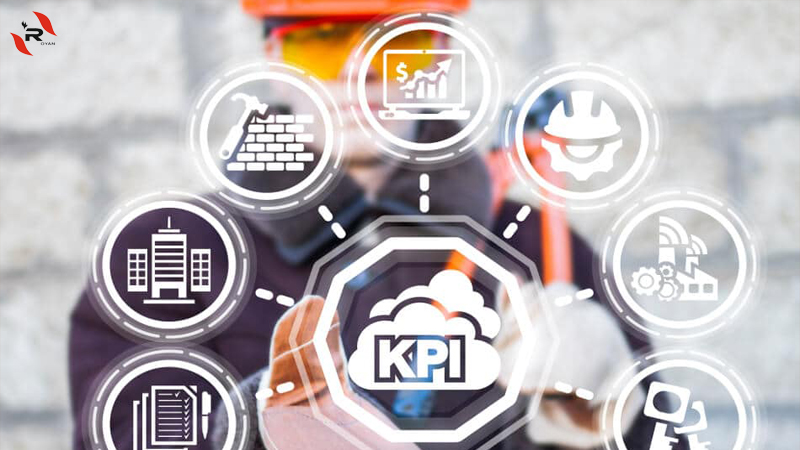
Introduction | Why are KPIs vital in HSE?
In today’s world where Health, Safety and Environment (HSE) plays a fundamental role in the sustainability of organizations, one cannot expect improvement without accurate measurement. Just like a compass for an explorer, KPIs (Key Performance Indicators) determine for HSE managers whether they are moving in the right direction.
But do all organizations really use KPIs correctly? Or are they just numbers and charts to decorate reports and meetings?
This article aims to show you, with an analytical look, what KPI is in HSE, how it should be defined, what errors are common in its implementation, and finally why training in this field is an urgent need for HSE experts and managers.
Part One | What does KPI mean in HSE? A definition beyond dry statistics
KPI stands for Key Performance Indicator. In the field of HSE, these indicators are used to measure the success of an organization in achieving its safety, employee health, and environmental protection goals.
Two types of KPIs are common in HSE:
-
Leading Indicators: Such as the number of preventive inspections, trainings held, safety meetings, review of identified risks, level of employee participation in reporting systems.
-
Lagging Indicators: Such as fatal accident rates, number of days lost, number of medical reports, amount of environmental fines.
Although lagging indicators are very common, advanced organizations place more emphasis on leading indicators, as these help with prevention, not just reporting.
Part Two | Fatal Mistakes in Defining KPIs in HSE
One of the common mistakes in companies is defining indicators that HSE staff cannot directly influence. For example:
“Reduce accidents by 50% in the next 6 months” is a wish, not a KPI, if it is not clear what actions need to be taken.
Other common mistakes:
-
Defining KPIs without consulting frontline staff
-
Focusing solely on reducing accident rates, rather than improving safety culture
-
Lack of appropriate tools for accurate data monitoring
-
Using KPIs only during audits or inspections
As a result, not only does improvement not occur, but employees become distrustful and unmotivated, and indicators become a tool for “playing with numbers.”
Part Three | Characteristics of an Effective HSE KPI
A good indicator should have SMART characteristics:
-
Specific: Know exactly what we are measuring.
-
Measurable: Be data-driven.
-
Achievable: Be realistic.
-
Relevant: Connected to the HSE objective.
-
Time-bound: Has a specific time frame.
Example of a smart KPI:
“30% increase in the number of toolbox talk sessions in the technical unit by the end of the summer season”
Such an indicator is precise, observable, actionable, safety-related, and has a clear timeline.
Part Four | From KPI to Safety Culture: What is the Missing Link?
KPIs are valuable when they lead to a change in behavior. If employees are simply trying to “record numbers” on forms, KPIs will do nothing to improve safety culture.
What is the solution?
-
Employee participation in designing and monitoring KPIs
-
Continuous and transparent feedback derived from KPIs
-
Transforming data into real operational actions
-
Use KPIs in improvement and decision-making meetings, not just for reporting
In fact, KPI should be the cultural compass of the organization, not just a tool to satisfy external auditors.
Part Five | Training, the Key to Effective KPI Implementation in HSE
Can safety personnel be expected to define appropriate KPIs without specialized training?
Do senior managers really know which indicators are most effective?
Do experts know how to turn raw data into strategic decisions?
The answer is clear: without practical and specialized training, KPI becomes self-defeating.
For this reason, at the HSE Specialized Institute, we offer professional courses in KPI design and analysis in two ways:
In-person training course:
Suitable for various companies, projects, and industries – including practical workshops, case analysis, and custom KPI design.
Non-face-to-face (online) training course:
Suitable for working professionals or those living in cities – includes educational videos, practical exercises, and dedicated instructor support.
Conclusion | Good numbers do not equal good performance; but good numbers + good analysis = sustainable safety
HSE KPIs, if carefully designed, can be the driving force behind safety in an organization. However, if implemented without training, analysis, and culture building, they become mere statistical showcases for superficial reports.
If you want to transform KPIs from statistical tools to real improvement tools, the first step is training.
📢 Registration for the KPI specialized course at HSE has begun
✅ Comes with an official certificate
✅ Direct support from an instructor
✅ Real-world exercises tailored to your workplace
✅ Training in designing, implementing, and analyzing leading and lagging indicators
✅ Especially for experts, supervisors, and safety, health, and environmental managers


Leave a Reply