Search for:
  • Home
  • Education
    • In-person training
      • Domestic education
      • Education abroad
    • Online training
      • List of trainings
  • Partner organizations
    • Universities in the country
    • Domestic educational centers
    • Educational centers abroad
  • Associate Professors
    • Domestic professors
    • Foreign professors
  • Consulting
    • In-person consultation
    • Online consultation
  • Scientific visit
    • Asia
    • Eastern Europe
    • Western Europe
  • Contact us
    • About us
 
  • 09359204884
  • info@imenro.co
  • Persian
  • Contact us
  • About us
ایمن و نجات رویان
  • Home
  • Education
    • In-person training
      • Domestic education
      • Education abroad
    • Online training
      • List of trainings
  • Partner organizations
    • Universities in the country
    • Domestic educational centers
    • Educational centers abroad
  • Associate Professors
    • Domestic professors
    • Foreign professors
  • Consulting
    • In-person consultation
    • Online consultation
  • Scientific visit
    • Asia
    • Eastern Europe
    • Western Europe
  • Contact us
    • About us
0

Get Started

What does first aid include?
2025-06-12
Posted by مدیر سایت
Safety
52 بازدید

When accidents occur or life-threatening situations arise, the most important factor in first aid to save lives is time. Participating in first aid training courses and learning the practical and accurate set of basic first aid measures is essential for all of us so that we can properly help the injured person in emergency situations. In the following, we will examine the basic life-saving measures (first aid), stay with us.


Evaluation

In any emergency first aid situation, the first aider should:

* First assess the scene for safety and security.
* Then assess the patient from head to toe.

Scene assessment for first aid purposes:

Dangers that may threaten you when entering the scene of an accident include:

– Secondary traffic accident: the occurrence of an accident
– Electric shock (high-low voltage)
– Drowning and suffocation in deep water or fast, turbulent water currents
– Exposure to toxic gases, chemicals, or vapors

Assessing the patient or injured person in first aid:

In providing first aid, assess the nature of the injury or illness and determine the priorities for care needed. If the casualty appears to be unconscious, first check for responsiveness. To do this, call out loudly and shake the shoulder firmly. If the casualty is unresponsive, be prepared to perform CPR.
If the casualty responds to you, gather important information and plan any emergency treatment needed.

In cases where the injury or illness appears to be severe, call 911 and then follow these simple steps to administer first aid:

1- The injured person and those present at the scene should briefly explain what happened, when it started, and the presence of any underlying conditions such as asthma, diabetes, epilepsy, or heart disease.
2- Ask the patient to describe any symptoms, including pain, irritation, or discomfort, and any other unusual sensations, such as numbness or tingling in their fingertips.
3. Examine the patient carefully and look for signs of illness or injury (based on your observations, taking into account the history and symptoms described by the patient or those around them). For each injury, look for any of the following:
Bleeding
Bruise
Wound
Inflation
Deformity (compared to the other side of the member)
Loss of power or performance
4. After initial treatment, check the patient’s vital signs every few minutes. Any change or worsening of the patient’s condition requires a change in the way the patient is managed.

Assessing vital signs in first aid

State of consciousness:

Check the patient’s level of consciousness approximately every 5 minutes, noting any changes (especially if worsening). Check to see if the patient is fully alert and responding appropriately, or semi-conscious and moaning.

Airway:

Make sure the patient’s airway is open and clear, and that the patient does not have secretions that could obstruct the airway.

Breathing:

Check the patient’s breathing for normality, note changes in the rate and rhythm (regular or irregular) of breathing, and check the patient’s breathing for deep or shallow, quiet or noisy, and the presence of abnormal sounds such as wheezing when breathing. Because in an unconscious patient, any changes may indicate a worsening of the patient’s condition.

Blood circulation:

Consider the change in heart rate as a guide. Check for fast or slow, strong or weak, and regular or irregular heartbeat. In unconscious, breathing patients and conscious patients, the pulse should be felt on the underside of the wrist at the base of the thumb.

Skin:

Look at the skin and note its color (is it pale blue), and feel whether it is warm (for example, in a patient with a fever) or cool and moist (for example, in shock).
If the condition worsens, place the patient in the recovery position.
Call emergency number 115.

Introducing the first aid and emergency measures and skills that must be performed:

Patient transfer

As a general rule, avoid moving the patient due to the risks of potential complications from underlying conditions (such as cervical or lumbar spine injuries). Exceptions include turning an unconscious person to one side for airway management or moving the person to a safer location (for example, out of traffic to the side of a road or street).
Avoid lifting the casualty off the ground, even with the help of others, as this is likely to cause displacement and damage to bones and muscles. A safer method is to pull the casualty along the longitudinal axis of his body. You can use the stretch of the arms or legs to do this, this will keep the body in a stable position and there will be very little displacement.
Safe and secure methods for the rescuer to move the patient in emergency situations where the injured person cannot be present at the scene of the accident until the rescue forces arrive (such as highway accidents, explosions, etc.) are given below. Our general recommendation is not to move the injured person until the rescue forces arrive.

Leg pulling method

This method is preferred when there is no obvious lower extremity injury.
In this method, the rescuer bends slightly and firmly grasps the injured person’s ankle. By leaning back and using body weight, the rescuer gently moves the injured person to the ground.

Hand drawing method

The rescuer should use this method when there is obvious lower extremity injury.
In this position, the rescuer should bend slightly and place the casualty’s hands above his head, then firmly grasp the casualty’s elbows. The elbows should be placed firmly next to the casualty’s head to support the head and prevent it from moving as it is pulled to the ground. If it is impossible to keep the arms next to the head, the rescuer should grasp the wrists. In this position, the rescuer bends slightly and firmly grasps the casualty’s wrists, and by leaning back and using body weight, gently moves the casualty to the ground.

How to pull on clothes

If the casualty has multiple injuries, pulling the casualty’s clothing may be a better way to prevent direct traction. This method has the added risk of the casualty’s clothing suddenly tearing, causing a sudden pressure (whiplash) on the casualty. It is always best to use body contact techniques, as described above, whenever possible, to reduce the risks of moving the casualty.
This method should be used when the casualty is wearing appropriate clothing (for example, a jacket or coat) that can support their weight. To use the clothes pull method, the rescuer should firmly grasp the casualty’s clothing, then bend over and, leaning back, firmly grasp the casualty’s armpits and pull them to the ground.

Blanket stretcher

This method is only safe and reliable when there is a sturdy blanket of the right size to support the victim’s entire body and at least six people are present. This method is not suitable for life-threatening emergencies, but it can be useful in a remote area where trained personnel may take a long time to arrive. It is also suitable for helping to transport a sick or injured person in difficult weather conditions.
First, you should turn the blanket lengthwise and roll it up about halfway. Then, place the rolled side next to the casualty. Make sure the blanket is large enough to protect the casualty’s head and legs. Then, three people kneel next to the casualty on the opposite side and, using a rolling technique in which the casualty’s head, neck, spine, pelvis, and legs are kept in a straight line, roll the casualty toward them, with the person supporting the head and neck. In this case, the rolled part of the blanket will be close to the casualty’s spine. Then, gently roll the casualty back onto the ground.
In this position, the casualty is placed on the blanket and you can roll up the rest of the blanket from the other side so that the casualty is placed in the middle of the two rolled up parts of the blanket. To prevent the casualty from moving, bring the rolled up blanket as close to the casualty’s body as possible. Three other people will stand on the other side of the blanket and the casualty. The first person on each side should hold the rolled up blanket so that one hand is near the ear and the other hand is near the casualty’s shoulder.
The second person, on each side of the blanket, should hold the casualty with one hand near the middle of the chest and the other near the pelvis. The third person, on each side of the blanket, should hold the casualty’s thigh with one hand and his leg with the other hand.
Then, when the emergency personnel arrive, you should gently lift the injured person while holding the blanket tightly, all together at the same time, and at the command of the group leader.
Then move the casualty to the designated location. It is very important to move together in coordination to minimize the casualty’s movement. Once you have reached the desired location, again under the command of the group leader and in coordination with each other, slowly and carefully lower the casualty.

The injured are stuck at the scene.

Sometimes the injured person may be stuck and need the help of emergency personnel to rescue and perform first aid measures; for example:
If someone is trapped in a car, a rescue team with hydraulic equipment is needed.
If a person is trapped in a confined space at work, assistance from a “confined space permit” is needed.
The rescuer can perform several actions to preserve the life of the casualty (until the casualty is fully rescued). The rescuer should attempt to implement standard assessment and management procedures. Examples of these are listed below.

Unconscious casualty

If the casualty is unconscious inside the vehicle, clear and open the airway in the same position you found them. If the casualty is sitting in the vehicle with the seat belt fastened, do not unbuckle the seat belt to immobilize the casualty.
To support the jaw, perform the head-back-chin-up maneuver and support the head while you clear and open the casualty’s airway. Support the casualty’s head from behind or through the side windows.

The injured person is bleeding.

If the injured person is bleeding and it is not possible to apply a pressure dressing and bandage to the bleeding area, the rescuer should place pads on the site and apply pressure with her hands until emergency services arrive.

Caring for the injured in a remote area

In emergencies in isolated or remote areas, there are particular challenges for the rescuer; although it is very rare for those involved not to have access to a telephone or mobile phone. When people work in remote areas (for example surveyors or mining engineers) there are general guidelines for managing emergencies which (should be considered by employers in advance) are:

* Communication strategies to notify the nearest assistance location
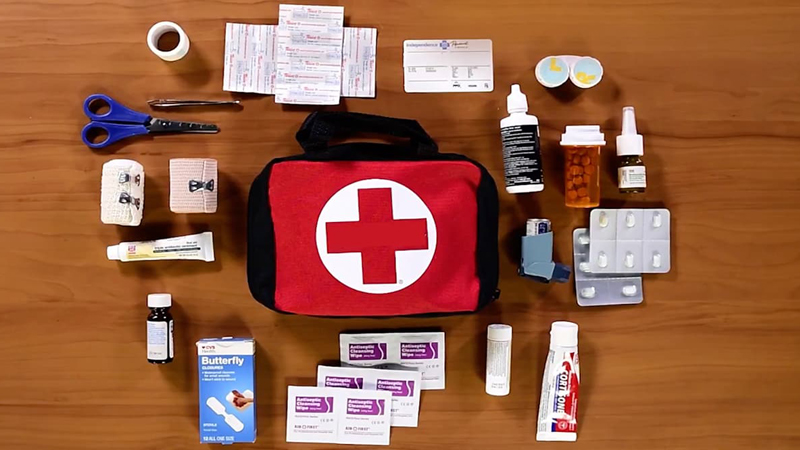
* Provide a medical kit, including a wide range of medications and first aid equipment

* In emergencies, you only need to call the nearest emergency center, 115.
Tags: Environmentfirst aidHealthSafety
در تلگرام
کانال ما را دنبال کنید!
در اینستاگرام
ما را دنبال کنید!
در یوتوب
ما را دنبال کنید!
Created by potrace 1.14, written by Peter Selinger 2001-2017
در آپارات
ما را دنبال کنید!

مطالب زیر را حتما مطالعه کنید

Incident Command System (ICS)
Key Performance Indicators (KPI) in HSE
Familiarity with firefighting equipment
Occupational Health and Safety Engineering
What is HSE and what is its use?

Leave a Reply Cancel reply

کریمی‌نیک دات کام

Our goal is to promote a culture of safety, increase preparedness, and save lives. Join us as we use knowledge and preparedness to control risk before it happens.

  • No. 76, Kowsar Alley, Sepehr Street, West Shahrak, Tehran
  • 09359204884
  • imenro.co.ir@gmail.com
Quick access
  • Home page
  • Blog
  • List of trainings
  • Scientific visit
  • Partner organizations
  • My account
  • Cart
  • Checkout
  • Education
  • Consulting
  • About us
  • Contact us
Symbols of trust

کلیه حقوق محفوظ است: شرکت ایمنی و نجات رویان.

Sign In

Lost your password?

Not a member yet? Sign Up